
Real-Life Conversations in English are practical dialogues used in everyday situations such as home, school, office, shopping, travel, restaurants, phone calls, and social communication. These conversations help learners improve spoken English naturally and confidently.
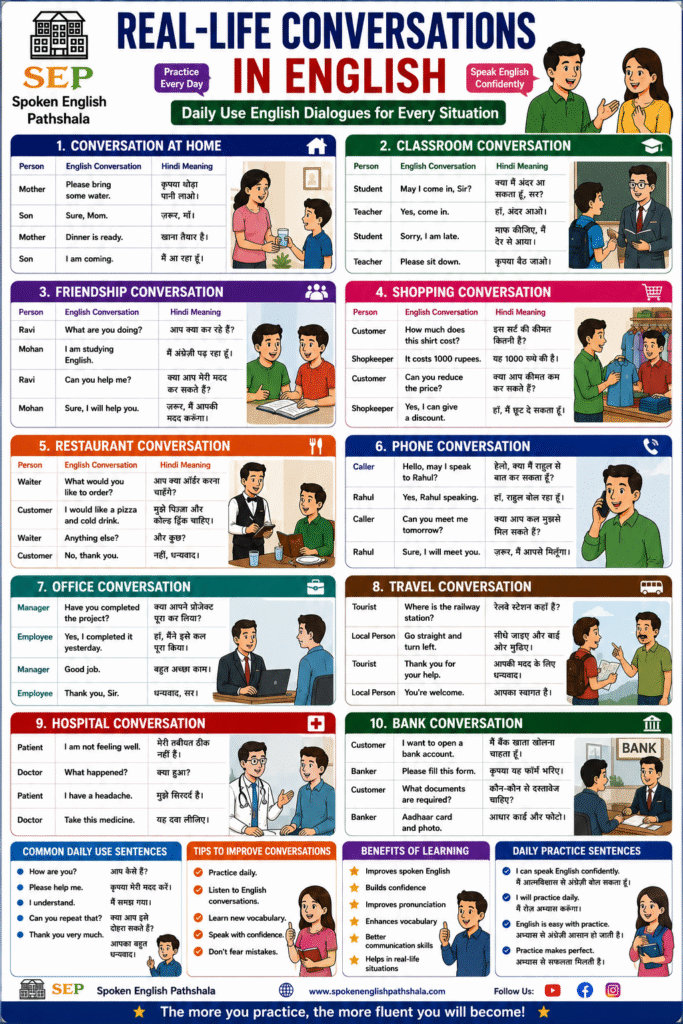
Practicing real-life English conversations improves:
- Spoken English
- Communication skills
- Pronunciation
- Vocabulary
- Fluency
- Confidence
At Spoken English Pathshala, we provide simple English conversations with Hindi meanings for beginners and spoken English learners.
Why are Real-Life Conversations Important?
Real-life English conversations help learners:
- Speak confidently in daily situations
- Understand natural English communication
- Improve fluency and pronunciation
- Build vocabulary
- Improve listening and speaking skills
1. Conversation at Home
| Person | English Conversation | Hindi Meaning |
|---|---|---|
| Mother | Please bring some water. | कृपया थोड़ा पानी लाओ। |
| Son | Sure, Mom. | ज़रूर, माँ। |
| Mother | Dinner is ready. | खाना तैयार है। |
| Son | I am coming. | मैं आ रहा हूँ। |
2. Classroom Conversation
| Person | English Conversation | Hindi Meaning |
|---|---|---|
| Student | May I come in, Sir? | क्या मैं अंदर आ सकता हूँ, सर? |
| Teacher | Yes, come in. | हाँ, अंदर आओ। |
| Student | Sorry, I am late. | माफ कीजिए, मैं देर से आया। |
| Teacher | Please sit down. | कृपया बैठ जाओ। |
3. Friendship Conversation
| Person | English Conversation | Hindi Meaning |
|---|---|---|
| Ravi | What are you doing? | आप क्या कर रहे हैं? |
| Mohan | I am studying English. | मैं अंग्रेज़ी पढ़ रहा हूँ। |
| Ravi | Can you help me? | क्या आप मेरी मदद कर सकते हैं? |
| Mohan | Sure, I will help you. | ज़रूर, मैं आपकी मदद करूँगा। |
4. Shopping Conversation
| Person | English Conversation | Hindi Meaning |
|---|---|---|
| Customer | How much does this shirt cost? | इस शर्ट की कीमत कितनी है? |
| Shopkeeper | It costs 1000 rupees. | यह 1000 रुपये की है। |
| Customer | Can you reduce the price? | क्या आप कीमत कम कर सकते हैं? |
| Shopkeeper | Yes, I can give a discount. | हाँ, मैं छूट दे सकता हूँ। |
5. Restaurant Conversation
| Person | English Conversation | Hindi Meaning |
|---|---|---|
| Waiter | What would you like to order? | आप क्या ऑर्डर करना चाहेंगे? |
| Customer | I would like a pizza and cold drink. | मुझे पिज़्ज़ा और कोल्ड ड्रिंक चाहिए। |
| Waiter | Anything else? | और कुछ? |
| Customer | No, thank you. | नहीं, धन्यवाद। |
6. Phone Conversation
| Person | English Conversation | Hindi Meaning |
|---|---|---|
| Caller | Hello, may I speak to Rahul? | हेलो, क्या मैं राहुल से बात कर सकता हूँ? |
| Rahul | Yes, Rahul speaking. | हाँ, राहुल बोल रहा हूँ। |
| Caller | Can you meet me tomorrow? | क्या आप कल मुझसे मिल सकते हैं? |
| Rahul | Sure, I will meet you. | ज़रूर, मैं आपसे मिलूँगा। |
7. Office Conversation
| Person | English Conversation | Hindi Meaning |
|---|---|---|
| Manager | Have you completed the project? | क्या आपने प्रोजेक्ट पूरा कर लिया? |
| Employee | Yes, I completed it yesterday. | हाँ, मैंने इसे कल पूरा किया। |
| Manager | Good job. | बहुत अच्छा काम। |
| Employee | Thank you, Sir. | धन्यवाद, सर। |
8. Travel Conversation
| Person | English Conversation | Hindi Meaning |
|---|---|---|
| Tourist | Where is the railway station? | रेलवे स्टेशन कहाँ है? |
| Local Person | Go straight and turn left. | सीधे जाइए और बाईं ओर मुड़िए। |
| Tourist | Thank you for your help. | आपकी मदद के लिए धन्यवाद। |
| Local Person | You’re welcome. | आपका स्वागत है। |
9. Hospital Conversation
| Person | English Conversation | Hindi Meaning |
|---|---|---|
| Patient | I am not feeling well. | मेरी तबीयत ठीक नहीं है। |
| Doctor | What happened? | क्या हुआ? |
| Patient | I have a headache. | मुझे सिरदर्द है। |
| Doctor | Take this medicine. | यह दवा लीजिए। |
10. Bank Conversation
| Person | English Conversation | Hindi Meaning |
|---|---|---|
| Customer | I want to open a bank account. | मैं बैंक खाता खोलना चाहता हूँ। |
| Banker | Please fill this form. | कृपया यह फॉर्म भरिए। |
| Customer | What documents are required? | कौन-कौन से दस्तावेज चाहिए? |
| Banker | Aadhaar card and photo. | आधार कार्ड और फोटो। |
Common Daily Use Sentences
| English Sentence | Hindi Meaning |
|---|---|
| How are you? | आप कैसे हैं? |
| Please help me. | कृपया मेरी मदद करें। |
| I understand. | मैं समझ गया। |
| Can you repeat that? | क्या आप इसे दोहरा सकते हैं? |
| Thank you very much. | आपका बहुत धन्यवाद। |
Tips to Improve Real-Life English Conversations
Practice Daily
Speak English every day in daily situations.
Listen Carefully
Watch English videos and conversations.
Learn Vocabulary
Learn useful English words regularly.
Speak with Confidence
Do not fear mistakes while speaking.
Practice with Friends
Real conversations improve fluency naturally.
Benefits of Learning Real-Life Conversations
- Improves spoken English
- Builds communication confidence
- Enhances vocabulary
- Improves pronunciation
- Helps in social and professional communication
- Makes English speaking natural
Daily Practice Sentences
| English Sentence | Hindi Meaning |
|---|---|
| I can speak English confidently. | मैं आत्मविश्वास से अंग्रेज़ी बोल सकता हूँ। |
| I will practice daily. | मैं रोज़ अभ्यास करूँगा। |
| English is easy with practice. | अभ्यास से अंग्रेज़ी आसान हो जाती है। |
| Practice makes perfect. | अभ्यास से सफलता मिलती है। |
Real-Life Conversations in English are very useful for improving spoken English and communication skills. Regular practice of practical English conversations helps learners become fluent and confident English speakers.
At Spoken English Pathshala, we provide easy spoken English lessons, grammar practice, and daily use English conversations for learners of all levels.
FAQs About Real-Life Conversations in English
Q1. What are real-life conversations in English?
They are practical English dialogues used in everyday situations.
Q2. Why are real-life conversations important?
They improve spoken English, fluency, and communication confidence.
Q3. Can beginners learn real-life conversations easily?
Yes, beginners can improve through regular conversation practice.
Q4. How can I improve English communication skills?
Practice speaking, listening, and daily conversations regularly.
Q5. How many conversations should beginners practice daily?
Beginners can start with 5–10 daily conversations every day.