
Friend-to-Friend Conversations are simple and natural English dialogues used between friends in daily life. These conversations help learners improve spoken English, communication skills, pronunciation, fluency, and confidence.
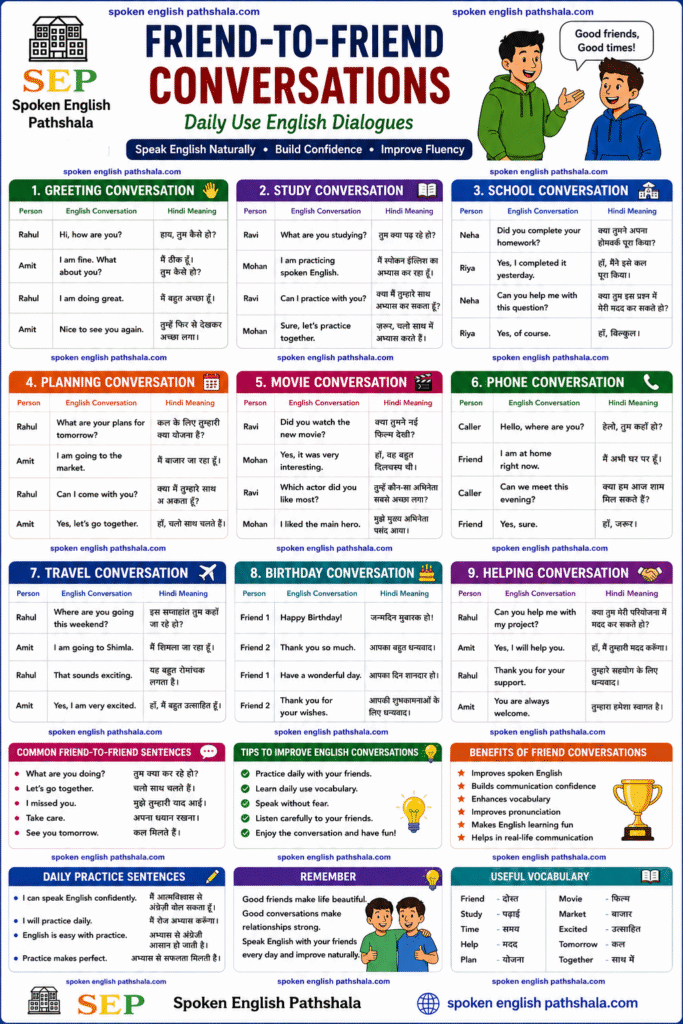
Practicing casual English conversations with friends is one of the best ways to learn spoken English naturally and comfortably.
At Spoken English Pathshala, we provide simple English dialogues with Hindi meanings for beginners and spoken English learners.
Why are Friend-to-Friend Conversations Important?
Friendship conversations help learners:
- Speak English confidently
- Improve fluency naturally
- Learn daily use vocabulary
- Improve pronunciation
- Build communication confidence
- Practice real-life English speaking
1. Greeting Conversation Between Friends
| Person | English Conversation | Hindi Meaning |
|---|---|---|
| Rahul | Hi, how are you? | हाय, तुम कैसे हो? |
| Amit | I am fine. What about you? | मैं ठीक हूँ। तुम कैसे हो? |
| Rahul | I am doing great. | मैं बहुत अच्छा हूँ। |
| Amit | Nice to see you again. | तुम्हें फिर से देखकर अच्छा लगा। |
2. Study Conversation Between Friends
| Person | English Conversation | Hindi Meaning |
|---|---|---|
| Ravi | What are you studying? | तुम क्या पढ़ रहे हो? |
| Mohan | I am practicing spoken English. | मैं स्पोकन इंग्लिश का अभ्यास कर रहा हूँ। |
| Ravi | Can I practice with you? | क्या मैं तुम्हारे साथ अभ्यास कर सकता हूँ? |
| Mohan | Sure, let’s practice together. | ज़रूर, चलो साथ में अभ्यास करते हैं। |
3. School Conversation Between Friends
| Person | English Conversation | Hindi Meaning |
|---|---|---|
| Neha | Did you complete your homework? | क्या तुमने अपना होमवर्क पूरा किया? |
| Riya | Yes, I completed it yesterday. | हाँ, मैंने इसे कल पूरा किया। |
| Neha | Can you help me with this question? | क्या तुम इस प्रश्न में मेरी मदद कर सकते हो? |
| Riya | Yes, of course. | हाँ, बिल्कुल। |
4. Planning Conversation
| Person | English Conversation | Hindi Meaning |
|---|---|---|
| Rahul | What are your plans for tomorrow? | कल के लिए तुम्हारी क्या योजना है? |
| Amit | I am going to the market. | मैं बाजार जा रहा हूँ। |
| Rahul | Can I come with you? | क्या मैं तुम्हारे साथ आ सकता हूँ? |
| Amit | Yes, let’s go together. | हाँ, चलो साथ चलते हैं। |
5. Movie Conversation
| Person | English Conversation | Hindi Meaning |
|---|---|---|
| Ravi | Did you watch the new movie? | क्या तुमने नई फिल्म देखी? |
| Mohan | Yes, it was very interesting. | हाँ, वह बहुत दिलचस्प थी। |
| Ravi | Which actor did you like most? | तुम्हें कौन-सा अभिनेता सबसे अच्छा लगा? |
| Mohan | I liked the main hero. | मुझे मुख्य अभिनेता पसंद आया। |
6. Phone Conversation Between Friends
| Person | English Conversation | Hindi Meaning |
|---|---|---|
| Caller | Hello, where are you? | हेलो, तुम कहाँ हो? |
| Friend | I am at home right now. | मैं अभी घर पर हूँ। |
| Caller | Can we meet this evening? | क्या हम आज शाम मिल सकते हैं? |
| Friend | Yes, sure. | हाँ, ज़रूर। |
7. Travel Conversation Between Friends
| Person | English Conversation | Hindi Meaning |
|---|---|---|
| Rahul | Where are you going this weekend? | इस सप्ताहांत तुम कहाँ जा रहे हो? |
| Amit | I am going to Shimla. | मैं शिमला जा रहा हूँ। |
| Rahul | That sounds exciting. | यह बहुत रोमांचक लगता है। |
| Amit | Yes, I am very excited. | हाँ, मैं बहुत उत्साहित हूँ। |
8. Birthday Conversation
| Person | English Conversation | Hindi Meaning |
|---|---|---|
| Friend 1 | Happy Birthday! | जन्मदिन मुबारक हो! |
| Friend 2 | Thank you so much. | आपका बहुत धन्यवाद। |
| Friend 1 | Have a wonderful day. | आपका दिन शानदार हो। |
| Friend 2 | Thank you for your wishes. | आपकी शुभकामनाओं के लिए धन्यवाद। |
9. Helping Conversation
| Person | English Conversation | Hindi Meaning |
|---|---|---|
| Rahul | Can you help me with my project? | क्या तुम मेरी परियोजना में मदद कर सकते हो? |
| Amit | Yes, I will help you. | हाँ, मैं तुम्हारी मदद करूँगा। |
| Rahul | Thank you for your support. | तुम्हारे सहयोग के लिए धन्यवाद। |
| Amit | You are always welcome. | तुम्हारा हमेशा स्वागत है। |
Common Friend-to-Friend Sentences
| English Sentence | Hindi Meaning |
|---|---|
| What are you doing? | तुम क्या कर रहे हो? |
| Let’s go together. | चलो साथ चलते हैं। |
| I missed you. | मुझे तुम्हारी याद आई। |
| Take care. | अपना ध्यान रखना। |
| See you tomorrow. | कल मिलते हैं। |
Tips to Improve English Conversations with Friends
Practice Daily
Speak English with friends every day.
Learn Daily Vocabulary
Learn common daily use English words.
Speak Without Fear
Do not hesitate while speaking English.
Listen Carefully
Listening improves pronunciation and fluency.
Enjoy the Conversation
Fun conversations make learning easier.
Benefits of Friend-to-Friend Conversations
- Improves spoken English
- Builds communication confidence
- Enhances vocabulary
- Improves pronunciation
- Makes English learning fun
- Helps in real-life communication
Daily Practice Sentences
| English Sentence | Hindi Meaning |
|---|---|
| I can speak English confidently. | मैं आत्मविश्वास से अंग्रेज़ी बोल सकता हूँ। |
| I will practice daily. | मैं रोज़ अभ्यास करूँगा। |
| English is easy with practice. | अभ्यास से अंग्रेज़ी आसान हो जाती है। |
| Practice makes perfect. | अभ्यास से सफलता मिलती है। |
Friend-to-Friend Conversations in English are very useful for improving spoken English and communication skills. Regular practice of casual conversations helps learners become fluent and confident English speakers.
At Spoken English Pathshala, we provide easy spoken English lessons, grammar practice, and real-life English conversations for learners of all levels.
FAQs About Friend-to-Friend Conversations
Q1. What are friend-to-friend conversations?
They are casual English dialogues used between friends in daily life.
Q2. Why are friendship conversations important?
They improve spoken English, fluency, and confidence.
Q3. Can beginners improve English through friendly conversations?
Yes, regular conversations with friends improve speaking skills quickly.
Q4. How can I improve English speaking with friends?
Practice daily speaking, listening, and vocabulary learning.
Q5. Which English sentences are most common between friends?
Greeting, planning, helping, and casual conversation sentences are very common.